Guitar Maintenance - Humidity and Temperature Control
Acoustic guitars are crafted from multiple types of wood. Though cut and shaped, these woods remain ···View More


02-28,2026 | BY:SAGA Team | 3556
Acoustic guitars are crafted from multiple types of wood. Though cut and shaped, these woods remain living organic materials, retaining the ability to exchange moisture with their surroundings.
Humidity is wood's invisible sculptor. When air is dry, moisture evaporates from within the wood, causing cells to contract. In humid conditions, wood absorbs moisture, causing cells to expand. These microscopic changes accumulate, altering the guitar's structure on a macroscopic level: excessive dryness can cause the top to warp and the finish to crack; excessive moisture can cause the top to bulge and the neck to bend.
Temperature acts as a catalyst for these changes. High temperatures accelerate moisture exchange, while low temperatures slow it down. More dangerous are sudden temperature shifts, which cause different parts of the wood to expand or contract at different rates, creating irreparable internal stress.

Precise Temperature and Humidity Control
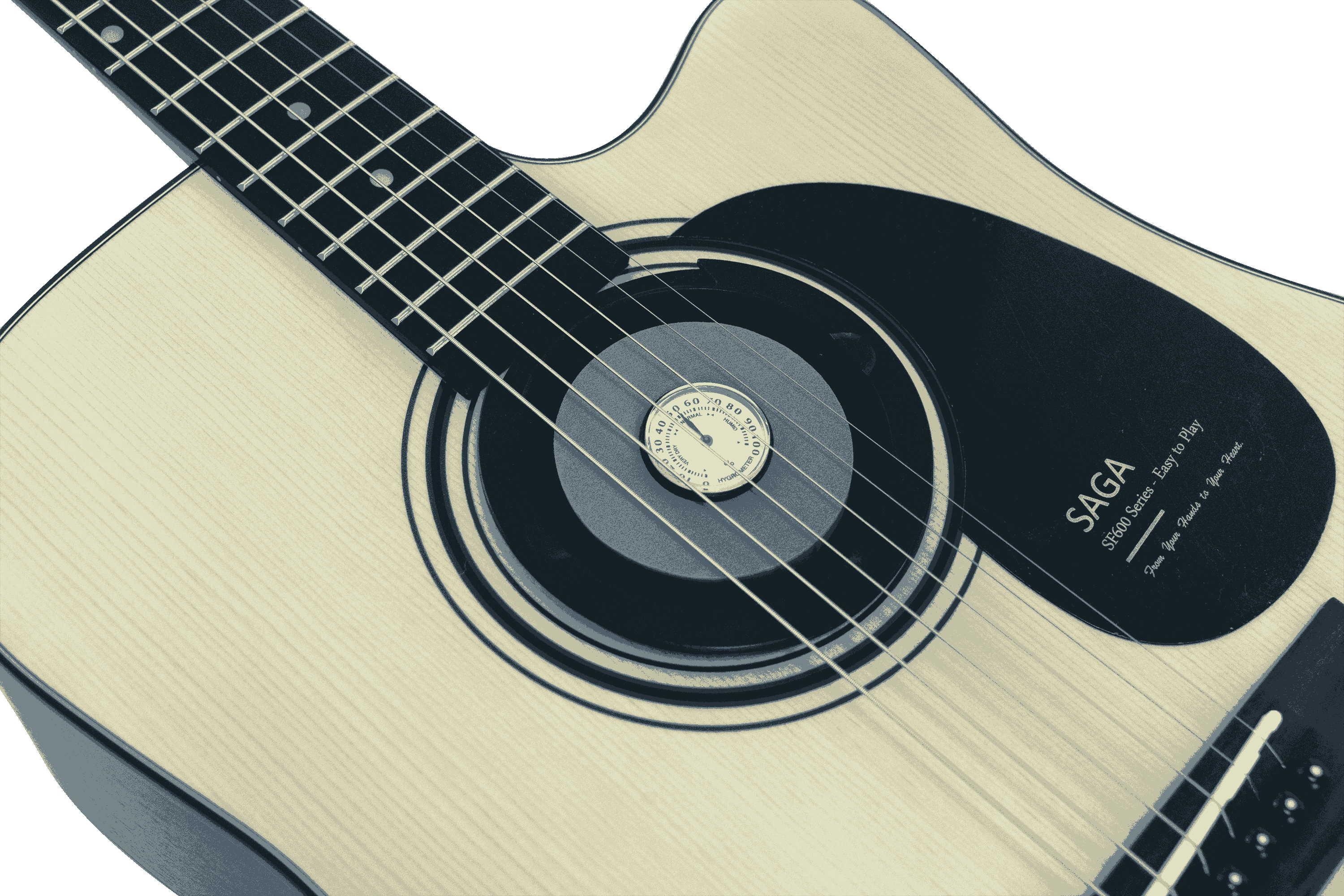
Monitoring is the first step in control. Placing a reliable thermo-hygrometer in the guitar's storage area is crucial. Do not rely on perception; human sensory temperature and humidity readings often differ from instrument measurements.
Ideal Conditions: Maintain relative humidity between 40%-60% and temperature between 18-24°C. Extreme dryness or humidity can cause irreversible damage to your guitar.
Dangers of Dryness: When humidity drops below 40%, wood shrinks, causing the top to sag, lacquer to crack, the neck to bow backward, and even adhesive joints to separate. Heated rooms in northern winters are an “invisible killer” for guitars.
Dangers of Humidity: Above 60% humidity, wood expands, causing strings to rise, the neck to bow forward, and in severe cases, joints to loosen. Mold growth may also occur.
Practical Solutions
• Purchase a reliable thermo-hygrometer to monitor your guitar's storage environment at all times
• Use a humidifier during dry seasons, especially a soundhole humidifier
• Use desiccants during humid seasons
• Avoid placing guitars near air vents, radiators, or in direct sunlight
“The best guitar isn't the most expensive one, but the one cared for most meticulously.” This care begins with the most fundamental respect and understanding of humidity and temperature. When you create a stable environment for your guitar, it will reward you with decades of consistent tone and playing experience.
Thank you for reading.